

The first time someone told me they were "putting money in the S&P 500," I nodded along like I knew exactly what they meant. I did not, really. I pictured a single stock, or maybe a fancy account you had to qualify for. The truth is far less glamorous and far more useful.
Here is the version I give friends now. The S&P 500 is not a thing you buy. It is a list, kept by a company called S&P Dow Jones Indices, of roughly 500 large US companies. The names are familiar: big technology, big banks, big consumer brands, the companies whose products are probably within arm's reach of you right now.
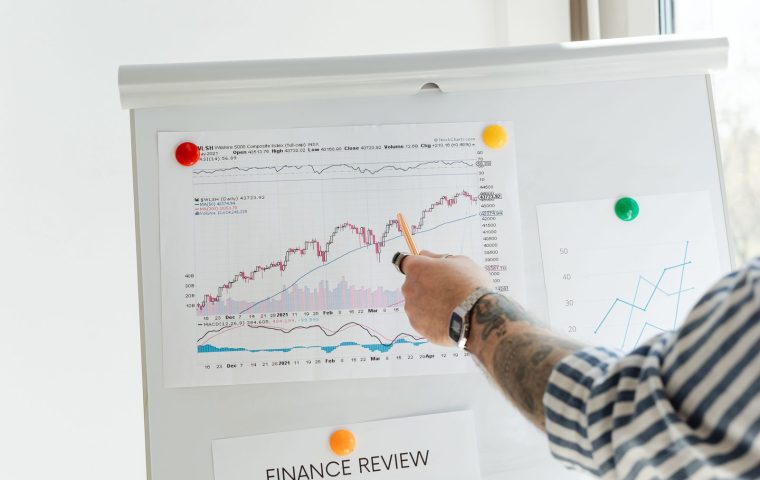
When people say "the market" was up or down, they usually mean this list. A move of 1 percent measures how that whole basket of companies did together. Let me walk through what that means for your money.
What the index is really measuring
An index is just a scoreboard. The S&P 500 takes around 500 of the largest companies on US stock exchanges and combines them into one number. That number does not represent dollars in anyone's account. It is more like a temperature reading for a big slice of the economy.
One detail trips up almost everyone. The index is weighted by company size, not split evenly. A company worth two trillion dollars counts far more than one worth twenty billion. So even though there are about 500 names, the giants at the top move the number much more than the smaller members. When a single huge technology company has a rough week, the whole index can dip even if most of the other 490-something companies did fine.
That weighting is why the S&P 500 is a decent shorthand for large US companies, but a poor stand-in for small companies, international stocks, or your neighbor's bakery. It measures one specific thing, and it measures it well.
How a regular person actually owns it
Here is the part that confused me for years. You cannot buy "the S&P 500" directly, because it is a list, not a product. What you buy is a fund that holds all the companies on that list in the same proportions. These come in two flavors: an index mutual fund and an exchange-traded fund, usually called an ETF. Both do roughly the same job of tracking the index.
Picture a simple scene. Maya, 28, puts $200 a month into one broad S&P 500 index fund inside a Roth IRA. With that single choice, her money spreads across hundreds of large companies at once. She did not have to research individual stocks or guess which one would win. This is the idea behind how to start investing small amounts every month, which beats waiting for a big lump sum more often than people expect.
The fee on a fund is called its expense ratio, a small yearly percentage. A broad S&P 500 index fund often charges around 0.03 to 0.10 percent. On a $10,000 balance, 0.05 percent is about $5 a year. Compare this number first, because high fees quietly drag on returns for decades.
Why so many people track it
The S&P 500 became the default benchmark for a few practical reasons. It is broad enough to reflect the large-company part of the US market, it has a long track record, and it is hard to beat. That last point is the interesting one.
Professional fund managers who try to pick winning stocks are, as a group, measured against this index. Over long stretches, most fail to beat it after fees. For an ordinary investor, that is oddly freeing. You do not need to outsmart the market. You can own a slice of it cheaply and let time do the heavy lifting.
I think of it like a long road trip. Clever timing is weaving between lanes to save four minutes. Steady investing is keeping a sensible speed and arriving. The weavers feel busy. The steady driver gets there with less stress.
A common myth, gently corrected
The biggest misconception I hear is that the S&P 500 "always goes up." It does not. It has had brutal years, with stretches where an investor watched a balance fall by a third or more and sat through recoveries that took years, not weeks.
What is true historically is that, over periods measured in decades, the broad US market has trended upward through that turbulence. But there is no guarantee baked into the index, no promised return, and no rule that the next ten years must look like the last ten. Anyone who promises a specific number is guessing.
If you might need the money within three to five years, the S&P 500 is a risky place to park it. A short timeline plus a market drop is how people get forced to sell at the worst moment. Short-term cash usually belongs somewhere stable, like a high-yield savings account covered by FDIC insurance up to $250,000 per depositor, per bank.
Where it fits in your bigger picture
An S&P 500 fund is a strong core holding for many long-term goals, but it is not a complete plan by itself. Two questions usually matter more than which fund you pick.
The first is which account holds the fund. The same index fund behaves differently inside a 401(k), a traditional IRA, a Roth IRA, or a taxable brokerage account, because each has its own tax treatment. If your employer offers a 401(k) match, contributing enough to capture that full match is close to free money and usually comes first. Sorting out the order is what deciding between taxable and tax-advantaged accounts and where to invest first is meant to help with.
The second is what else you own alongside it. Many people pair a US index fund with international stocks and bonds so they are not betting everything on one country. The S&P 500 is built for growth, not guaranteed income. If your worry is steady, predictable income in retirement, a clear look at how annuities work without the sales pitch covers one option people consider for that job.
Before adding anything fancy, many beginners do well to automate one modest monthly contribution into a single low-cost, broadly diversified fund and leave it alone. Set the amount low enough that you will not cancel it during a scary headline. Boring and consistent tends to win.
The honest limits of an index
The S&P 500 is a wonderful tool and a terrible master. It tells you how large US companies did. It does not know your age, your debts, your job stability, or how you sleep when your balance drops. Those things should shape your choices.
This article is educational, not personalized advice. The right mix for you depends on your timeline, income, employer plan, and comfort with risk, and tax rules like IRA contribution limits and FDIC coverage are US-specific. For a big decision, it is worth talking to a fee-only financial advisor or a tax professional who can look at your whole situation.
Is buying the S&P 500 the same as buying stocks?
Indirectly, yes. You are not buying the index itself, which is just a list. You buy a fund that holds shares of the companies on that list, so you own small pieces of hundreds of stocks at once instead of picking individual ones.
How much money do I need to start?
Often less than people assume. Many brokerages allow fractional shares, so you can begin with a small amount like $25 or $50. Watch the fund's expense ratio and any account minimums more than the headline share price.
Can I lose money in an S&P 500 fund?
Absolutely, especially over short periods. The value can fall sharply in a bad year, and there is no guaranteed return. Its historical strength has shown up over many years, which is why it suits money you will not need soon, not next month's rent.
If this still feels like a lot, that is normal, and you do not have to act today. Understanding what the S&P 500 measures, and what it does not, already puts you ahead of where I was nodding along pretending to know. Take it slowly, keep your costs low, and let the years do the work they are good at.