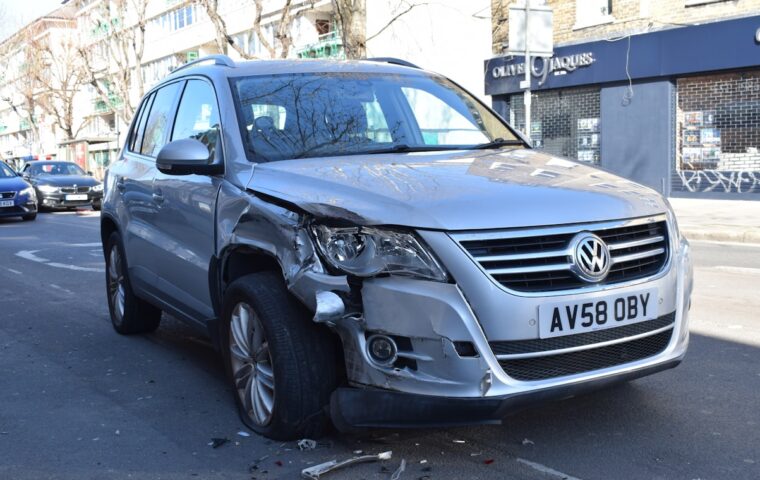

Picture this. You drive a new SUV off the lot, sticker price $38,000, financed almost in full. Eight months later a delivery van runs a red light and your SUV is totaled. Your insurer cuts a check for what the vehicle is worth that day, around $30,000, because cars lose value fast. Sounds fine, until you call the lender and find out you still owe $34,500. The check goes straight to the bank, and you are personally on the hook for the remaining $4,500. For a car you no longer have.
That ugly $4,500 gap is exactly what gap insurance exists to cover. I spent years on the broker side, and this is one of the few add-ons I rarely talked people out of when their situation called for it. It is cheap, it is narrow, and when it pays it can save you from making payments on a pile of scrap metal. Let me walk through what it does, when it earns its place, and when people get sold it without needing it.
What gap insurance actually covers
Gap insurance is short for "guaranteed asset protection." It is optional coverage that pays the difference between two numbers after your car is totaled or stolen: the amount you still owe on your loan or lease, and the actual cash value your insurer pays out.
Here is the part that trips people up. Standard auto insurance, the comprehensive and collision coverage you already pay for, only ever pays the actual cash value of the car: what it is worth the day it is destroyed, not what you paid and not what you owe. New cars depreciate sharply in the first year, sometimes 20 percent or more the moment you leave the dealership, so a gap between your loan balance and the car's value can open up fast, especially if you put little down. Gap coverage does not touch a fender bender and it does not lower your premium. It does one job, and only when the car is a total loss or stolen.
Your regular insurance pays what the car is worth. Gap insurance pays the leftover loan balance your check did not cover.
A real-world example with the numbers spelled out
Say you buy a $32,000 sedan, put $1,000 down, roll in taxes and fees, and finance $33,000 over 72 months. Long loans like that keep you "underwater" longer, because the balance drops slowly while the car keeps depreciating.
Fourteen months in, the car is totaled. Your loan balance is roughly $29,500, but the car's actual cash value has fallen to about $24,000. Your collision coverage pays the $24,000 (minus your deductible, and I cover how that works in How Insurance Deductibles Actually Work). That leaves you short $5,500, which the lender still wants. With gap insurance that $5,500 is covered and you owe nothing. Without it, you are paying every month for a car in a salvage yard.
| Item | Amount |
|---|---|
| Loan balance at loss | $29,500 |
| Insurer pays (actual cash value) | $24,000 |
| The gap you owe | $5,500 |
| What gap insurance covers | $5,500 |
One detail worth knowing: many gap policies do not cover your deductible, though some do. Read the fine print so you know whether that $500 to $1,000 comes back.
When gap insurance is worth it, and when it is not
Gap coverage is genuinely useful for some buyers and a waste for others. Lean toward buying it if any of these describe you:
- You put down less than 20 percent on the car.
- You financed for 60, 72, or 84 months.
- You rolled negative equity from an old loan into the new one.
- You leased the vehicle (many leases require gap, and some build it in).
- You bought a model that depreciates quickly.
You can comfortably skip it if you made a big down payment, bought a used car that has already taken its steepest depreciation hit, took a short loan like 36 months, or paid cash. The honest test: compare what you owe today against what your car would realistically sell for. If the balance is higher, you have a gap worth protecting, and once the car is worth more than you owe, you can drop the coverage.
Buy gap coverage through your own auto insurer, not the dealership finance office. Through an insurer it often runs around $20 to $60 a year. Dealers frequently sell it as a one-time fee of $500 to $700 rolled into the loan, where you then pay interest on it. Same protection, very different price.
How dealers and lenders price it
In the finance office at the end of a long car-buying day, gap insurance is one of several add-ons presented quickly. The number sounds small next to a $33,000 loan, but folded into financing, that $600 charge accrues interest for the life of the loan, so you might pay $750 or more.
Your auto carrier prices the same coverage differently because it already knows your risk profile, and the way carriers build any premium follows a logic worth understanding, which I cover in How Insurers Decide What You Pay. Buying gap from the company that already insures you is almost always cheaper and easier to cancel. And if a dealer sold it to you as a lump sum and you pay off or refinance early, you may be owed a prorated refund, so call and ask.
Common myths that cost people money
"My full coverage already protects me."
It does not, not for this. Full coverage pays actual cash value, full stop. The gap between that value and your loan is precisely the thing your regular policy ignores. This is the most common misunderstanding, and an expensive one.
"Gap insurance pays off my whole loan no matter what."
No. It only triggers on a total loss or theft, and it covers the gap, not your entire balance regardless of circumstances. If you are behind on payments, those overdue amounts and late fees usually are not covered.
"It is a scam the dealer invented."
The product is legitimate. What earns it a bad name is where people buy it and the price they pay, not the coverage itself.
Gap insurance is most valuable in the first year or two of a loan, when depreciation outruns your payments. Check your loan balance against your car's value once a year, and the day you reach positive equity, consider dropping it.
Where gap fits in your wider money picture
Gap insurance is a small patch over one specific risk. The bigger protection against a car disaster is cash you can reach without going into debt. If a $5,500 gap would force you onto a high-interest credit card, your savings cushion is thin, and it is worth reading up on Where to Keep Your Emergency Fund so that money is both safe and reachable. Gap coverage handles the catastrophic total loss; an emergency fund handles the rest.
The right call depends on your down payment, loan length, state rules, and your comfort with risk. For a purchase this size, a quick talk with a licensed insurance agent costs nothing and can keep you from overpaying.
Does gap insurance cover my deductible?
Sometimes. Some policies reimburse your collision or comprehensive deductible as part of the payout, and many do not. Check the policy language before you buy, because a $500 to $1,000 deductible is real money to leave on the table.
Can I cancel gap insurance once my car is worth more than I owe?
Yes, and you usually should. Once you have positive equity, the coverage has nothing left to protect. If you bought it as a lump sum through a dealer and paid the loan off early, ask the issuer for a prorated refund.
Do I need gap insurance if I paid cash for the car?
No. Gap insurance only covers the difference between a loan balance and the car's value. With no loan, there is no gap and nothing for the coverage to do.
Gap insurance is a rare thing in the add-on world: cheap, simple, and genuinely useful for the right buyer. If you put little down or stretched your loan over many years, it can spare you from paying off a car that no longer exists. Build equity, and you cancel it and keep the savings.