
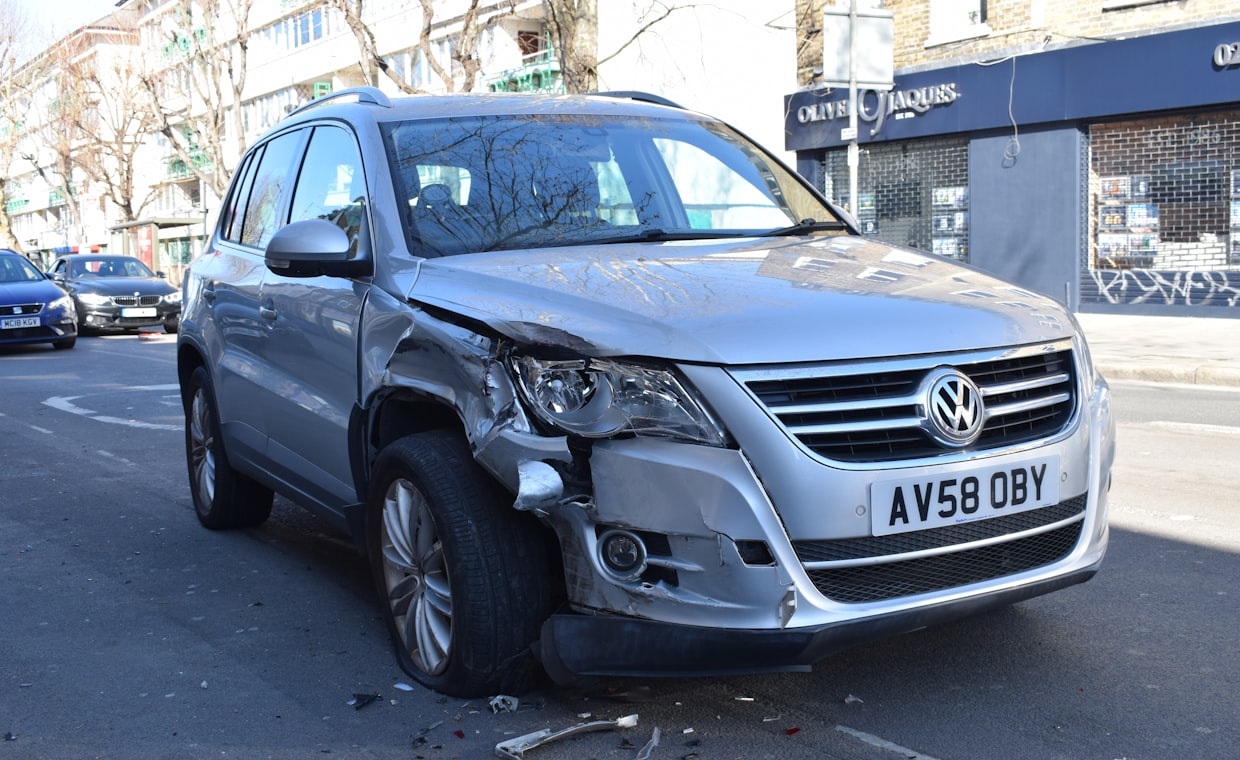
Picture a Tuesday afternoon. You are stopped at a red light when a car plows into your bumper. The other driver hops out, apologizes, and then admits the sentence no one wants to hear: "I actually don't have insurance right now."
Your car needs $6,000 in repairs. Your neck hurts. And the person legally responsible for all of it has no policy, no savings, and no realistic way to pay you back. So who covers the damage?
This is exactly the gap that uninsured and underinsured motorist coverage was built to fill. It is one of the least understood lines on your auto policy, and also one of the most useful. Let me walk you through what it does.
What uninsured and underinsured motorist coverage really means
Uninsured motorist coverage (usually shortened to UM) steps in when the driver who hit you has no insurance at all. Underinsured motorist coverage (UIM) kicks in when the other driver has a policy, but their limits are too low to cover everything they owe you.
Think of them as a backstop. Instead of chasing a stranger for money they do not have, you file a claim with your own insurer, and your own coverage pays. It feels strange the first time, because you are using your policy to cover someone else's fault. That is the whole point.
Both coverages exist because a real slice of drivers are on the road without adequate insurance. Estimates vary by state, but it is common to see figures suggesting roughly one in eight drivers carries no insurance at all. Even more carry the bare legal minimum, which often is not enough after a serious crash.
The two flavors: bodily injury and property damage
UM and UIM usually split into two parts, and the difference matters more than people expect.
Bodily injury (UMBI/UIMBI) covers medical bills, lost wages, and pain and suffering for you and your passengers. This is the heavy hitter, because injury costs are what bankrupt people after a bad wreck.
Property damage (UMPD/UIMPD) covers repairs to your vehicle. Not every state offers this part, and where it exists it sometimes carries a deductible. If you already carry collision coverage, your property damage may be handled there instead, which is why some drivers skip UMPD.
If your state does not sell UMPD, do not assume your car is unprotected. Collision coverage still pays to fix your vehicle after an uninsured driver hits you. UMPD mainly helps drivers who carry liability only and want their car covered in a hit by an uninsured motorist.
Why your liability coverage will not save you here
Here is the part that trips people up. Your liability coverage pays for damage you cause to other people. It does nothing for your own injuries or car when someone else is at fault and cannot pay.
That is a completely different job from UM/UIM. If you are still fuzzy on how the pieces of a policy divide up, my breakdown of liability vs full coverage lays out which part protects whom. UM and UIM sit alongside those, quietly filling the hole neither one addresses.
This is also why "I have full coverage, so I'm fine" is a risky assumption. Full coverage usually means liability plus collision plus comprehensive. It does not automatically include strong UM/UIM limits, and in some states you can waive them in writing without realizing it.
How the numbers actually play out
Let's make this concrete. Say another driver runs a stop sign, T-bones you, and you rack up $80,000 in medical bills. The at-fault driver carries the state minimum, which in many places is $25,000 per person in bodily injury liability.
Their insurer pays $25,000, and then the policy is exhausted. You are staring at a $55,000 shortfall. If you carry underinsured motorist bodily injury with a $100,000 limit, your own policy can cover that remaining gap (subject to how your state coordinates the two payouts).
Without UIM, that $55,000 becomes your problem. You could sue, but you cannot collect money that does not exist. This is the scenario UIM was designed for, and it is more common than the total-no-insurance case.
| Situation | Who is at fault | What pays your bills |
|---|---|---|
| You hit another car | You | Your liability coverage |
| Uninsured driver hits you | Them (no policy) | Your UM coverage |
| Low-limit driver hits you, bills exceed their limit | Them (underinsured) | Their liability first, then your UIM |
| You skid into a pole, no other car | You / no one | Your collision coverage |
Hit-and-run and phantom drivers
One underrated benefit: in many states, uninsured motorist coverage also applies to hit-and-run crashes. If a driver clips you and speeds off, they are effectively "uninsured" from your point of view because there is no one to bill.
Rules vary. Some states require physical contact between the two vehicles for a hit-and-run UM claim, which blocks "phantom vehicle" claims where a car forces you off the road without touching you. Ask your agent how your state treats these cases before you need to know.
After any hit-and-run, call the police and file a report the same day if you can. A police report is often required to open a UM claim, and memory of the plate, color, and direction fades fast.
How much should you carry?
A common rule of thumb is to match your UM/UIM bodily injury limits to your regular liability limits. If you carry $100,000/$300,000 in liability, carrying the same in UM/UIM keeps your protection symmetrical whether you cause a crash or get hit by someone who cannot pay.
Raising these limits is usually cheap compared to raising liability, because the insurer's exposure is narrower. If you are hunting for ways to lower your car insurance premium elsewhere, UM/UIM is often not the line to cut. Trimming a rarely-used add-on tends to save more than gutting a coverage that protects your income after a serious injury.
In several states you can legally reject or reduce UM/UIM, and some drivers do it to shave a few dollars without understanding the trade. If you signed a waiver years ago, pull out your declarations page and check. A coverage you rejected is a coverage that will not be there on your worst day.
Where it overlaps with other coverages
UM/UIM does not live in a vacuum. Health insurance, MedPay, and personal injury protection can all touch the same medical bill, and states have different rules about which pays first.
There is also a common mix-up with loan protection. UIM covers the gap between what the other driver owes and what they can pay. It does not cover the gap between your car's value and your loan balance. That second gap is a different product, and my explainer on what is gap insurance covers when it earns its keep.
The short version: UM pays when the other driver has no insurance. UIM pays when they have some but not enough. Both protect you, not the other person, and both are usually inexpensive to raise. Check whether you carry them, and whether the limits match your liability.
Is uninsured motorist coverage required?
It depends on your state. Some states mandate it, some require insurers to offer it and let you reject it in writing, and a few leave it fully optional. Check your declarations page to see what you actually carry today.
Will filing a UM/UIM claim raise my rates?
Because the crash was not your fault, a UM/UIM claim is less likely to be surcharged than an at-fault claim. Rules differ by insurer and state, though, so ask directly how a not-at-fault claim is treated before assuming it is free.
Does UIM cover my passengers too?
Generally yes. Underinsured and uninsured motorist bodily injury usually extends to passengers in your vehicle and often to you as a pedestrian or in another car, subject to your policy terms. Read the definitions section to confirm who counts as an insured person.
Coverage names like UM and UIM sound like alphabet soup, but the idea underneath is simple: they make sure someone else's lack of insurance does not become your financial emergency. Pull out your policy this week, find these lines, and confirm the limits look right. If a big decision hinges on the numbers, run them past a licensed agent. Better to check on a quiet afternoon than to learn the hard way at a red light.