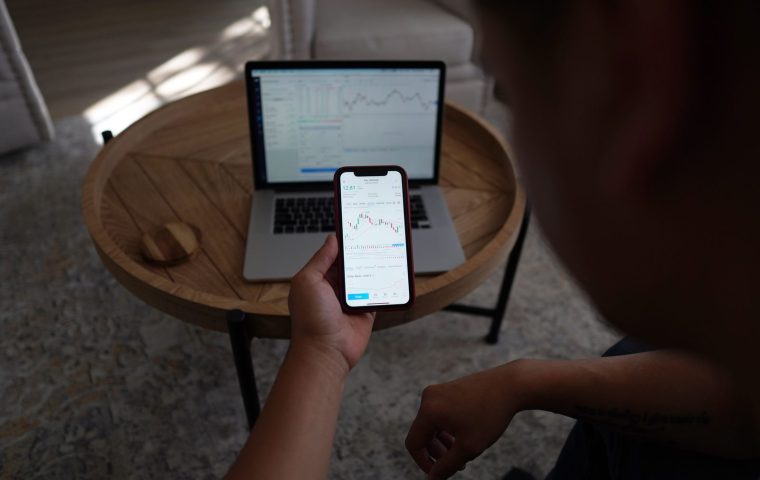

A friend texted me last spring, half excited and half panicked. He had just opened a brokerage account with $3,000 he had saved, and he wanted to know what to buy "before the market moved." A hot stock tip from a coworker, three browser tabs, and a real fear that if he waited a week he would miss out. I told him to close the tabs and breathe. The money was not going anywhere, and neither was the market.
That mix of excitement and fear is where most beginner mistakes are born. They rarely come from picking the wrong fund. They come from acting too fast, paying fees you cannot see, or letting free money slip past, and each one compounds in the wrong direction over years. Here are the ones I see most, and the plain fix for each.
Trying to time the market instead of just being in it
The most expensive beginner instinct is the urge to wait for the "right" moment. The trouble is that the days the market jumps the most often sit right next to the scary days, so on the sidelines you miss both.
Picture two people who each invest $200 a month for 20 years. One invests on the first of every month no matter what, while the other sits in cash during scary stretches and buys back in when things feel calm. More often than not, the boring investor ends up ahead, because the clever one keeps buying after the calm has pushed prices up.
Automate a fixed contribution, even something small like $50 every two weeks, into a broad index fund the day after payday. Removing the daily decision is most of the battle, because you stop reacting to headlines you no longer watch.
Leaving the employer match on the table
If your job offers a 401(k) match and you are not contributing enough to capture it, you are turning down a raise. A common structure is an employer matching 50 cents on the dollar up to 6 percent of pay. On a $50,000 salary, that 6 percent means $3,000 of your own money plus around $1,500 from your employer you would otherwise never see. The match is the closest thing to a guaranteed return you will find, and it is gone the moment a year passes without claiming it.
The fix is to set your contribution to at least the percentage your employer fully matches, pick a low cost target date fund if unsure, and raise the rate 1 percent a year. For more big picture errors, I cover several in Common Retirement Planning Mistakes to Avoid.
Ignoring fees because they look tiny
Expense ratios are the quietest leak in investing. A fund charging 1 percent a year does not send you a bill. It just skims a little off the top, every day, forever. On $100,000, the gap between a fund charging 1 percent and one charging 0.05 percent (normal for a broad index fund today) can quietly cost tens of thousands of dollars over 30 years.
The fix is to look up the expense ratio before you buy. Broad index funds and ETFs that track the whole US market often charge well under 0.10 percent. If you want to know what a major index actually holds, it is worth reading What the S&P 500 Actually Is so you know what you are buying.
Beyond expense ratios, ask about sales loads (an upfront commission of several percent) and advisory fees. If you cannot find the cost in plain language, treat that as the answer.
Putting money in the wrong account first
Plenty of beginners open a taxable brokerage account, fund it diligently, and never realize they skipped accounts that would have saved real money at tax time. The order you fill accounts matters as much as what you buy inside them.
A reasonable general sequence: contribute enough to a 401(k) to get the full match, then fund a Roth or traditional IRA, then go back and max the 401(k), and only after that add to a taxable account. An HSA, if you have a qualifying high deductible health plan, is its own quiet powerhouse, since the money goes in, grows, and comes out for medical costs untaxed. Whether a Roth or traditional fits depends on your income and whether you want the tax break now or later. I walk through the whole question in Taxable vs Tax-Advantaged Accounts: Where to Invest First.
Confusing investing with gambling on single stocks
The hot tip from a coworker, the stock everyone is posting about, the one you just know will take off. Buying individual stocks feels like investing, but with a beginner-sized account it is closer to a bet, and if one company is 40 percent of your money and stumbles, your whole plan stumbles with it. Diversification is the unglamorous fix. A broad index fund holds a slice of hundreds or thousands of companies at once, so a few can fail and a few can soar without sinking you. Treat individual stocks, if you want them, as a small slice under 5 percent you could lose without regret.
Investing money you will need next month
This one hurts at the worst time. Someone puts their entire savings into the market, then the car breaks down or a job ends, and they are forced to sell at a low point to cover the bill. The market did not fail them. They asked it to do a job it was never built for.
Money in stocks should be money you will not touch for at least five years. Cash you might need soon belongs somewhere boring and safe, like a high yield savings account at an FDIC insured bank, where deposits are protected up to $250,000 per depositor, per bank.
Before you invest a dollar, aim for a starter emergency fund of $1,000, then build toward three to six months of essential expenses in cash. That cushion is what lets you stay invested through a downturn instead of selling in a panic.
Reacting to every dip instead of staying the course
The last mistake is emotional, and it quietly undoes good planning. The market drops 15 percent, the news turns grim, and the urge to "do something" becomes overwhelming. So people sell, lock in the loss, then wait too long to get back in, buying high and selling low, the exact reverse of the goal.
A drop is not a problem to solve. For a long-term investor who is still contributing, it is simply shares on sale. Decide your plan in calm weather and write down why, so that when the storm comes you read your own reasoning instead of your fear.
Automate steady contributions, capture the full employer match, keep fees near zero, fill tax-advantaged accounts in a sensible order, diversify with broad funds, keep near-term cash out of the market, and do not sell in a panic.
How much money do I need to start investing?
Far less than most people assume. Many brokerages have no minimum, and fractional shares let you buy a slice of a fund for a few dollars. Starting with $50 a month into a low cost index fund builds the habit, which matters more early on than the size of the deposit.
Should I pay off debt before I invest?
It depends on the interest rate. High interest debt, like a credit card charging 20 percent APR, is almost certainly worth clearing first, because few investments reliably beat that cost. Lower rate debt, like many mortgages or student loans, can often run alongside investing, especially while you are capturing an employer match.
Do I need a financial advisor to start?
Not necessarily. Many beginners do well with a simple, automated portfolio of low cost index funds inside the right accounts. For bigger or more tangled decisions, a fee-only fiduciary advisor or a tax professional can be worth the cost.
None of these fixes are clever, and that is the point. Pick a steady contribution you can stick with, get the boring details right, and let time and compounding do the heavy lifting. For the big calls a licensed professional is worth talking to, but the everyday discipline you can build yourself.