
Here is a number that should bother you: a $4,000 balance on a card charging 24% APR, paying about $80 a month, takes more than 25 years to clear, and you pay over $5,000 in interest alone. The original purchases, maybe a refrigerator and a car repair, end up costing more than double. The statement never says this out loud. It just shows a tidy minimum payment box and lets you assume you have it handled.
I have watched smart people carry a balance for years without understanding the machine running underneath it. APR is not complicated once someone explains it like a human, so that is what I will do here. This is educational, not a verdict on your situation, but by the end you can read your own statement and know what it costs you.
What APR Actually Stands For
APR means Annual Percentage Rate, the yearly price of borrowing money expressed as a percentage. If your card has a 24% APR, the lender is charging you 24% per year on whatever you owe.
The catch is in the word "annual." Credit cards do not charge once a year. They charge every single day. The issuer divides your APR by 365 to get a daily rate, so a 24% APR becomes about 0.0657% a day. That sounds like a rounding error. It is not, because it applies to your balance every day, and the interest you owe gets added back into the pile.
That is what catches people off guard. You are paying interest on what you borrowed plus the interest from yesterday. That stacking effect is called compounding, and it works against you.
How Daily Compounding Quietly Stacks Up
Let me make this concrete. Say you carry a $3,000 balance at 22% APR and make no new purchases. Your daily rate is roughly 0.0603%, so on day one that is about $1.81 in interest. Small, right? But that $1.81 gets added to your balance, and the next day the rate applies to $3,001.81. By the end of a 30-day cycle you have racked up roughly $55, or about $660 a year just to stand still, on a balance you never added a dime to.
Most issuers calculate interest on your average daily balance, not the amount on your statement date. So paying down your balance earlier in the cycle, even a few days, lowers the average and shrinks the interest. Timing your payment is a small lever that genuinely helps.
The Grace Period: The One Window Where Interest Is Zero
Here is the most useful thing on this page. If you pay your statement balance in full every month, most cards charge you zero interest. None. This protected window is called the grace period, and it usually runs about 21 to 25 days between when your statement closes and when payment is due.
The grace period only applies to purchases, and only while you pay in full. The moment you carry a balance, even once, many cards suspend it. Now new purchases start accruing interest from the day they post, with no free window. People find this out the hard way: they carry a balance one month, then notice the next month's interest is bigger than expected because their fresh purchases are getting charged immediately too.
Set your autopay to the full statement balance, not the minimum. If the full amount is too much one month, pay as much as you can and treat the rest as an emergency to fix fast. The minimum is designed to keep you in debt comfortably, not to get you out.
Cash Advances and Different APRs on One Card
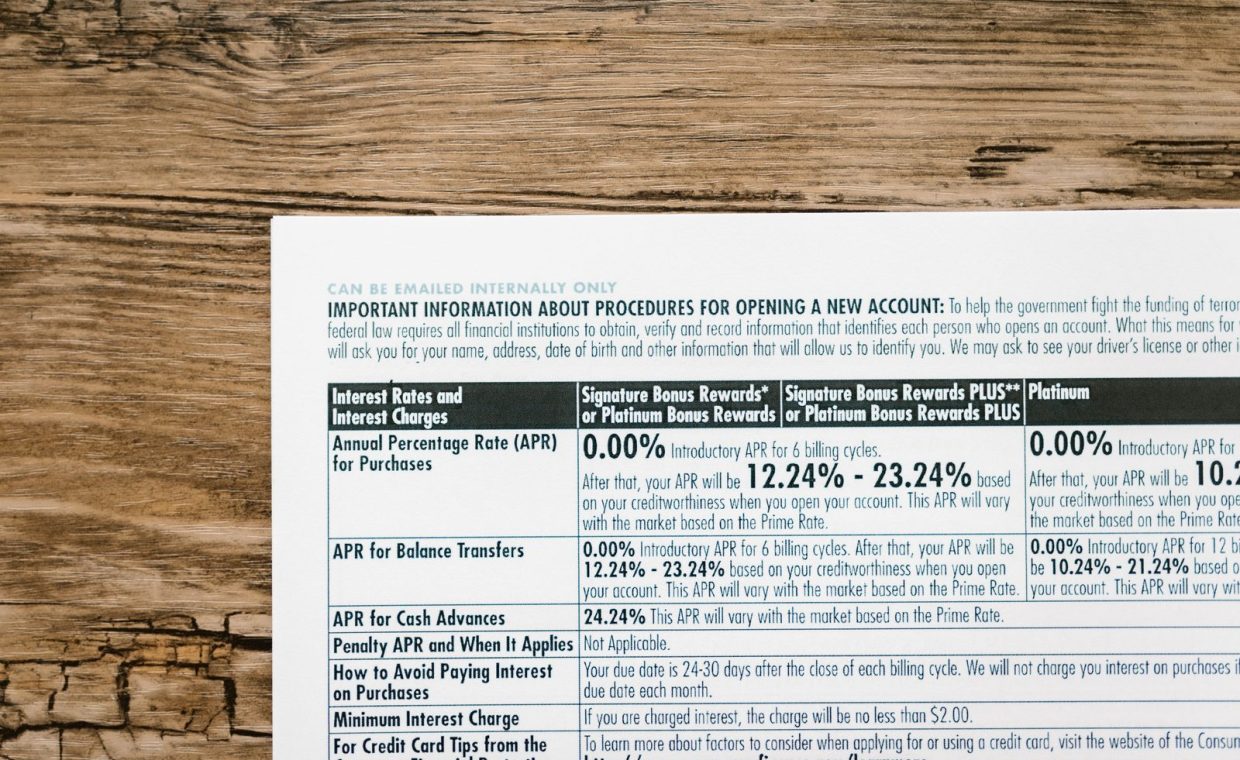
Your card almost certainly has more than one APR: a purchase APR, a separate and higher cash advance APR, and sometimes a penalty APR. Cash advances are the trap most people do not see coming.
Pull cash from a credit card, or use one of those "convenience checks" they mail you, and there is typically no grace period. Interest starts the moment you take the money, the APR is often 27% or higher, and there is usually a fee of 3% to 5% on top. The penalty APR deserves the same respect: pay late and some issuers raise your rate to nearly 30% for months, making every dollar you owe more expensive.
Fixed vs Variable, and Why Your Rate Moves
Almost all credit card APRs are variable. They are tied to an index called the prime rate, which moves with Federal Reserve decisions, and your rate is usually written as "prime plus a margin," say prime plus 14%. When the Fed raises rates, your card APR climbs a few weeks later, even if you did nothing. So the rate you were approved at is not locked. Check your current rate on a recent statement rather than the number you remember from signup, since that figure is the first thing to know before deciding whether a balance transfer makes sense for you.
What People Get Wrong About Carrying a Balance
The most expensive myth I run into is the belief that carrying a small balance "helps your credit score." It does not. You build credit by using a card and paying it off, not by leaving money owed. The scoring models care about your credit utilization, the percentage of your limit you are using, and lower is better. You can keep utilization low and your score healthy while paying in full every month. Carrying a balance just donates money to the bank for no benefit.
How many cards to keep matters here too, since each adds to your available limit and affects utilization, as How Many Credit Cards Should You Actually Have explains. If interest has already piled up, moving the balance to a lower-rate card can buy breathing room, though it has catches worth reading about in Balance Transfer Cards: Smart Move or Trap first. And if you share money with a partner, agreeing on which balances to attack first prevents friction, which is the heart of How to Budget as a Couple Without Fighting About Money.
Reading Your Own Statement
Pull up a recent statement and find three things: your APR (usually in the interest charge summary), your balance, and the interest charged this cycle. Multiply your balance by your APR and divide by 12 for a rough monthly interest estimate. If that number stings, it is supposed to. That sting is the clearest signal that paying the balance down fast beats almost any return you could chase elsewhere.
APR is the yearly cost of borrowing, charged daily and compounded. Pay in full and the grace period makes purchases interest-free. Carry a balance and interest stacks on interest. Utilization builds your score, not unpaid debt.
Does paying only the minimum hurt my credit score?
Paying the minimum on time keeps your account in good standing, so it does not directly hurt your score. The damage is financial: a low minimum lets interest compound for years. Separately, if your balance stays high relative to your limit, that high utilization can drag your score down.
If I pay my balance in full every month, am I really charged no interest?
On purchases, yes, as long as you pay the full statement balance by the due date every cycle. That is the grace period working as designed. Cash advances and balance transfers usually get no grace period, so those can accrue interest even when you pay everything else off.
Can my card company raise my APR without telling me?
For variable-rate cards, your APR moves automatically with the prime rate, with no advance notice. For other increases, US rules generally require 45 days notice, and the new rate typically applies only to future balances, not existing ones, except in cases like a penalty APR after missed payments.
None of this requires a finance degree, just a few minutes with your statement and the willingness to look at the real number. These rules are general and US-focused, and your own rate, limits, and best next move depend on your situation. If you are staring down a large balance and feeling stuck, a nonprofit credit counselor or a fee-only financial advisor can help you build a plan that fits your life. Either way, you now know what the machine is doing.