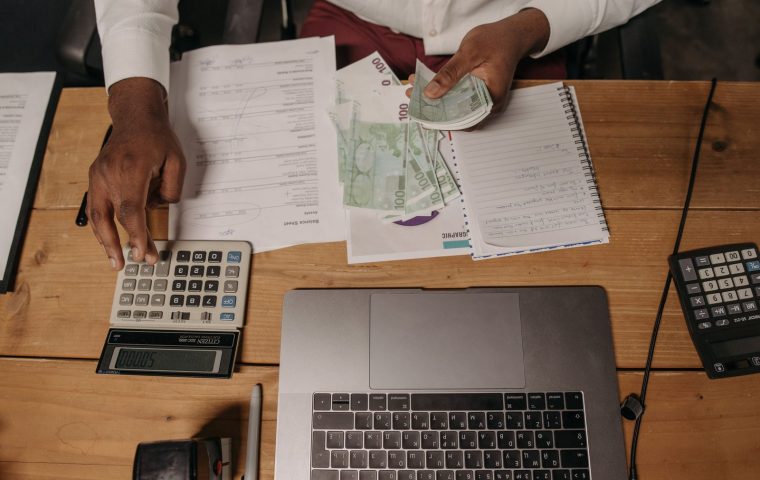


A friend of mine once added up a year of bank fees on a slow Sunday afternoon. Three overdraft charges, a couple of out-of-network ATM withdrawals, a monthly maintenance fee she had stopped noticing years ago. The total came to about 240 dollars. Not a fortune, but enough for a decent pair of winter boots and a tank of gas, gone to nobody in particular.
That is the thing about banking mistakes. They rarely announce themselves. There is no alarm, no big red number, just a slow leak of 12 dollars here and 35 dollars there that you mentally file under "the cost of having money." Most of these slips are completely fixable once you can see them, and you do not need a finance degree to plug the holes.
Here are the everyday banking habits that quietly cost regular account holders the most, why each one stings, and what to actually do about it.
Leaving cash to wilt in a near-zero checking account
This is the most common one I see, and the most painful, because it costs you nothing to fix. People keep their entire financial life parked in one checking account earning basically zero interest. Meanwhile that same money, sitting in the right kind of account, could be working a little.
Picture 8,000 dollars sitting in checking all year. In a standard account paying close to nothing, you earn maybe a dollar or two. Move that same balance into a savings account paying a competitive rate, and at recent levels you might earn somewhere around 300 dollars over the year for doing literally nothing different. The money is just as safe and just as yours.
The fix is to separate your spending money from your cushion. Your checking account is for bills and daily life. The rest belongs somewhere it can grow. If the difference between the two has never been clear to you, this short primer on Checking vs Savings Accounts: What Each Is For is worth five minutes. Then take a look at High-Yield Savings Accounts Explained, because the gap between a typical big-bank savings rate and a competitive online one is often the difference between a few cents and a few hundred dollars a year.
Keep roughly one to two months of expenses in checking as a buffer, then sweep the rest into a high-yield savings account. Set up an automatic transfer the day after payday so you never have to think about it. Money you do not see is money you do not spend.
Treating overdraft fees like they are unavoidable
Overdraft fees are one of the most expensive forms of borrowing most people will ever touch. A single overdraft charge often runs around 35 dollars. If that covers a 6 dollar coffee purchase that slipped through before your paycheck cleared, you have effectively paid a stunning interest rate to borrow six bucks for two days.
The mistake is not the occasional math error. It is leaving the default settings on and assuming overdrafts are just part of banking. They are not. You can opt out of overdraft coverage on debit card and ATM transactions entirely, which means a purchase that would overdraw your account simply gets declined instead. A declined card is a tiny moment of awkwardness. A 35 dollar fee is real money.
Many banks and credit unions now offer a small fee-free buffer, a grace period to fix a negative balance before charging you, or free low-balance alerts. Call your bank or open the app and ask what overdraft options exist. Then set a low-balance text alert at something like 100 dollars so you get a heads up before anything bounces.
Paying monthly maintenance fees you have already earned your way out of
A lot of checking accounts carry a monthly maintenance fee, often in the 10-15 dollar range, that gets waived if you meet a simple condition. Usually that means setting up direct deposit, keeping a minimum balance, or making a certain number of transactions a month.
Here is what quietly happens. People sign up, qualify for the waiver, and then their situation changes. They switch jobs and the direct deposit stops. Their balance dips below the minimum one month. The fee silently switches back on, and 12 dollars a month becomes 144 dollars a year for an account they assumed was free.
Pull up your last three statements and look for any line item that is a fee rather than a purchase. If you find a recurring maintenance charge, call and ask exactly what it takes to waive it. If the conditions no longer fit your life, plenty of banks and credit unions offer genuinely no-fee checking with no strings. There is rarely a good reason to pay rent on your own money.
Ignoring out-of-network ATM and foreign transaction fees
ATM fees are sneaky because they often hit you twice. The ATM owner charges you, and your own bank charges you for using an out-of-network machine. Two fees of around 3 dollars each on a 40 dollar withdrawal means you paid 15 percent just to access your own cash.
The fix is mostly about planning. Know where your bank's in-network ATMs are, or pick an account that reimburses ATM fees, which a number of online banks do. When you travel abroad, watch for foreign transaction fees too, typically around 3 percent of each purchase. Cards that waive those exist and are easy to find if you do a little homework before a trip.
Once a year, read your bank's fee schedule. It is boring, I know. But it is the single document that tells you exactly how your bank makes money off you, and it usually reveals one or two charges you can sidestep with a tiny change in behavior.
Confusing "safe at the bank" with "growing"
Keeping money in the bank feels responsible, and for your emergency fund it is exactly right. Cash you might need within a year or so should be liquid and protected. In the US, money in a bank or credit union is federally insured, through FDIC insurance at banks and NCUA coverage at credit unions, generally up to 250,000 dollars per depositor, per institution, per ownership category. That safety is real and worth understanding.
The mistake is keeping money you will not touch for ten or twenty years in cash, where inflation slowly erodes it. Over long stretches, prices tend to rise faster than a savings account pays, so a "safe" pile of cash can actually lose buying power year after year. That is why long-term goals like retirement usually belong in tax-advantaged accounts such as a 401(k), especially up to any employer match, or a traditional or Roth IRA, typically invested in low-cost, broadly diversified index funds or ETFs with small expense ratios.
None of that is one-size-fits-all. How much belongs in cash versus invested depends on your timeline, your income, your job stability, and how you sleep at night when markets wobble. For a decision that big, a fee-only financial advisor or a tax professional is genuinely worth the conversation. The point here is narrower: do not let a fear of investing leave decades of money quietly shrinking in a checking account.
Setting accounts up once and never looking again
Banking is not a slow cooker. You cannot set it and forget it for five years. Rates change, your bank changes its fee structure, your own life changes, and the account that fit you in 2021 may be costing you in 2026.
This same set-it-and-forget-it blind spot shows up across your financial life, not just at the bank. People do it with insurance constantly, renewing the same policy on autopilot without ever checking whether their rate still makes sense. Understanding How Insurers Decide What You Pay can help you see why an annual review of your premiums, deductibles, and coverage is just as valuable as reviewing your bank fees. The habit is the same: check in once a year, ask whether this still serves you, and switch when it clearly does not.
Separate spending money from savings and put the cushion in a high-yield account. Opt out of overdraft coverage and set low-balance alerts. Hunt down recurring maintenance fees and get them waived or leave. Avoid out-of-network ATM and foreign transaction charges. Keep emergencies in cash, invest long-term money, and review everything once a year.
Where the real money is
Add it all up and the typical account holder is leaving real money on the table, not through one dramatic blunder but through a handful of small defaults nobody ever turned off. The good news is that almost every fix on this list is a one-time, fifteen-minute task. Plug the leaks once and they stay plugged.
How much money should I keep in checking versus savings?
A common starting point is keeping about one to two months of expenses in checking to cover bills comfortably, then moving the rest, including your emergency fund, into a savings account that pays a better rate. The right split depends on your spending pattern and how steady your income is, so adjust the buffer until you stop bouncing close to zero.
Are high-yield savings accounts actually safe?
Yes, as long as the account is at an FDIC-insured bank or an NCUA-insured credit union, your deposits are federally protected up to the standard limit, generally 250,000 dollars per depositor, per institution, per ownership category. A higher rate does not mean higher risk here; many online banks simply have lower overhead and pass some of that on.
How do I get my bank to drop a fee I keep getting charged?
Call the bank, name the specific fee, and ask two things: how to qualify for a waiver, and whether they will reverse the most recent charge as a courtesy. Banks waive fees more often than people expect, especially for long-standing customers. If the waiver conditions no longer fit your life, switching to a no-fee account is usually faster than fighting the charge every month.
You do not have to overhaul your whole financial life this week. Pick the one mistake on this list that sounds most like you, fix it this afternoon, and let that small win build some momentum. Money habits compound the same way money does, quietly and in your favor once you point them the right way. And for the bigger calls about investing or insurance, a licensed professional can help you tailor any of this to your own situation.