
A few years ago, a reader told me she could not figure out where her money went. She earned a solid income and paid her bills on time, yet still ended every month wondering why her checking account looked like a deflated balloon. The culprit was not rent or her car payment. It was forty small swipes a week, each one too tiny to notice, that quietly added up to a few hundred dollars she never planned to spend.
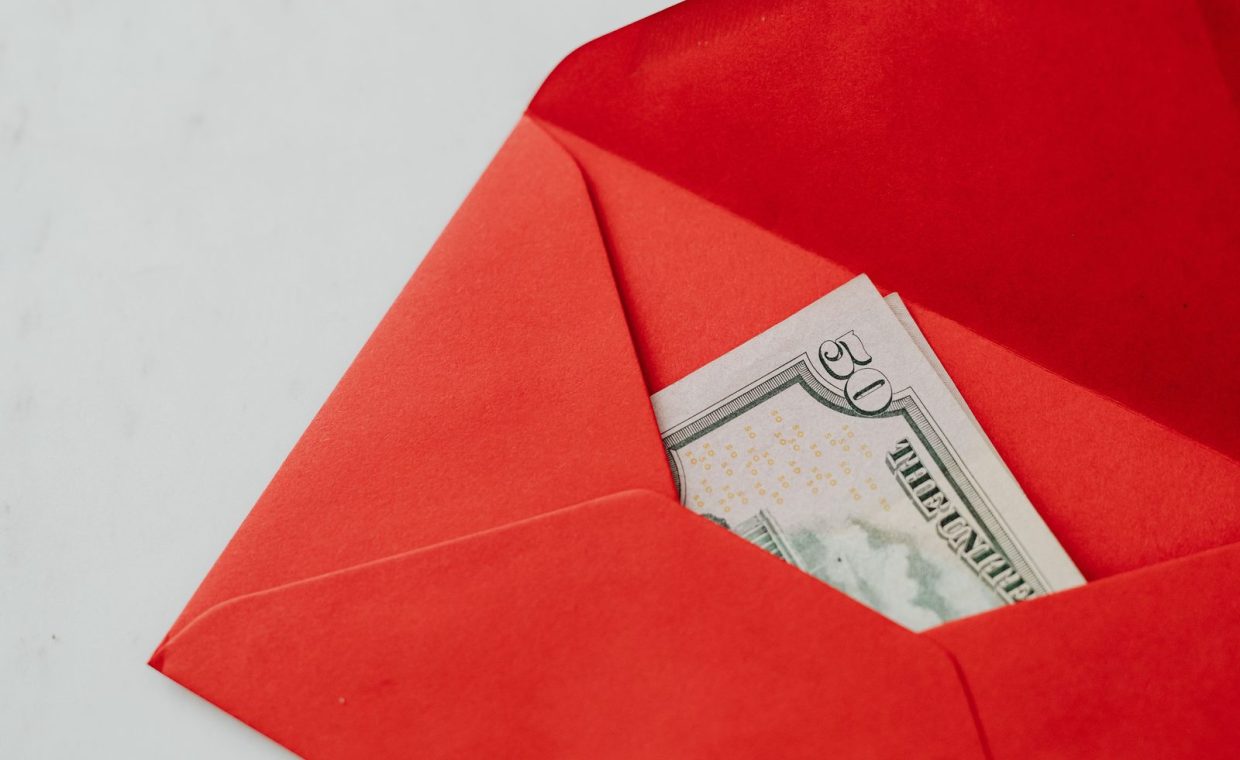
That is the exact problem the cash envelope system was built for. You take physical cash, divide it into labeled envelopes for each spending category, and when an envelope is empty, you are done spending in that category until next month. No overdraft, no "I will check the balance later," no surprises.
I am a fan of it for one reason: it makes a limit something you can hold in your hand. A number on a screen is easy to ignore. A thin envelope with two dollars left in it on the 22nd is not.
What the cash envelope system actually is
The idea is simple. You decide how much you will spend in each flexible category for the month, withdraw that amount in cash, and split it into envelopes labeled by category: groceries, dining out, gas, personal care, whatever your real spending looks like. Throughout the month, you pay for those things only with the cash in the matching envelope.
The categories that work best are the ones where you tend to overspend without noticing. Fixed bills like rent, insurance premiums, and loan payments do not belong in envelopes, because those amounts do not fluctuate based on willpower. Envelopes are for the squishy, decision-heavy spending: the meals out, the impulse Target run, the "we will just grab a few things" trip that becomes ninety dollars.
When the envelope is empty, the category is closed for the month. That hard stop is the entire point. You are not trusting yourself to remember a limit. The limit is physical.
Why physical cash hits differently than a card
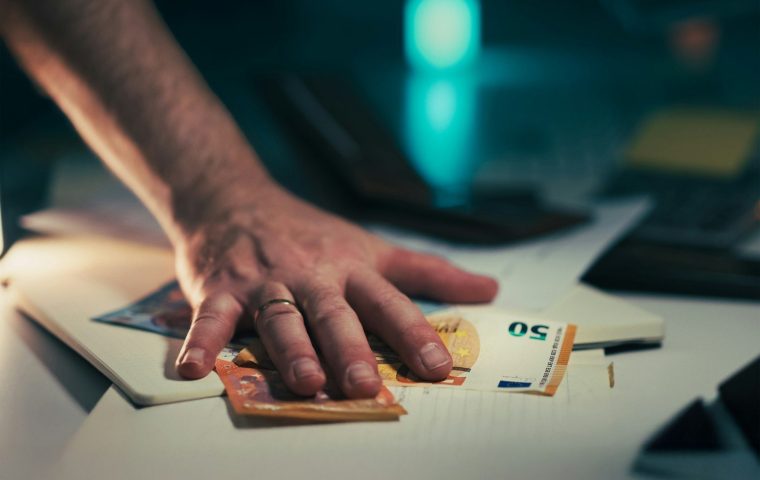
Spending cash genuinely feels different than tapping a card, and that feeling is the mechanism, not a side effect. When you hand over a twenty for a fifteen dollar lunch and get five dollars back, you watch your money leave. A card swipe is frictionless by design, which is wonderful for the bank and terrible for your awareness.
Picture a Friday night. Your dining envelope has sixty dollars left and it is the 25th. The restaurant in front of you will run about fifty-five dollars. With a card, you would not think twice. With the envelope, you feel that this is nearly everything you have left, and you make a real decision instead of a default one.
Do not envelope your entire budget on day one. Pick the two or three categories where you genuinely overspend, usually groceries, dining out, and "miscellaneous," and run only those in cash for one month. A focused test beats a perfect system you abandon by week two.
This is also why the system pairs so well with paying attention to your numbers. Before you choose your categories, it helps to spend a few weeks on how to track your spending so nothing slips through, because you cannot set a realistic grocery limit until you know what you actually spend on groceries.
Setting up your envelopes without overcomplicating it
Let me make this concrete. Say you take home about $3,800 a month. Your fixed costs (rent, utilities, insurance, your phone plan, your car payment, and minimum debt payments) come to roughly $2,500, and you set aside $500 for savings and irregular bills. That leaves about $800 in flexible, envelope-friendly spending.
You might split that $800 like this:
| Envelope | Monthly amount | What it covers |
|---|---|---|
| Groceries | $400 | All food bought at the store |
| Dining out | $150 | Restaurants, coffee, takeout |
| Gas | $120 | Fuel only |
| Fun and personal | $100 | Hobbies, haircuts, small treats |
| Miscellaneous | $30 | The "I forgot about that" buffer |
On payday, you withdraw that cash and fill each envelope, writing the category and starting amount on the front. Some people jot each purchase on the back so the envelope doubles as a running log. Keep the number of envelopes low; five or six is plenty. I have watched people set up fifteen tiny categories, lose track, and quit. The goal is friction in the right places, not a part-time accounting job.
The common mistakes that sink it
The first mistake is raiding one envelope to feed another. If groceries runs dry and you pull from the gas envelope, you have quietly dissolved the whole system. Sometimes borrowing is genuinely necessary, but make it a deliberate, noted decision rather than a reflex, and pay it back next month.
The second mistake is being unrealistic. If you set groceries at $250 when you truly spend $400, you will blow through it in two weeks, feel like a failure, and abandon the method. The envelope amounts should reflect your real life first, then tighten gradually once you see where the slack is.
Carrying large amounts of cash has its own risks. If an envelope is stolen or lost, that money is simply gone, with no fraud protection and no way to dispute it the way you could with a card. Keep envelopes at home, take only what you need for a given outing, and never treat your envelope cash as an emergency fund.
The third mistake is forgetting that some costs are seasonal: gifts in December, higher cooling bills in summer, back-to-school costs in August. Those do not fit neatly into a flat monthly envelope, which is where sinking funds come in. Saving a set amount each month toward a known future expense is the same discipline over a longer runway, and it is the backbone of how to save for a big purchase without going into debt.
Going digital without losing the feeling
Plenty of people like the concept but cannot stand using cash, and that is fair. Some banks and budgeting apps let you create multiple sub-accounts or "buckets" inside one account, so you can allocate money to named categories and watch each balance fall in real time. The discipline transfers even if the paper does not.
A debit card linked to a checking account also keeps your money protected by FDIC insurance, which covers up to $250,000 per depositor, per insured bank, per ownership category, something a physical envelope can never offer. The tradeoff is that a digital balance is easier to ignore than a thinning stack of bills, so digital envelopes ask a little more honesty from you.
One thing worth clearing up: using cash envelopes does nothing for your credit. Your score is built largely on payment history and credit utilization, not on whether you favor cash. If you are sorting out what actually moves that number, it is worth reading up on credit myths that hurt your score before you change your whole approach to plastic.
Who this really works for, and who can skip it
The envelope system shines for natural overspenders, for people who feel that cards make money abstract, and for anyone digging out of a spending habit who needs a hard boundary. It is a training tool as much as a budget. Many people use it intensely for six months to a year, internalize the limits, and then loosen up to a digital version.
If you are already a disciplined spender who tracks everything and never overshoots, you may not need the friction at all. This is one method among many. The right budgeting approach depends on your income, your habits, and what makes you stick with it, and for bigger money decisions a fee-only financial advisor can help you build a plan around your specific situation.
How much cash should I withdraw to start?
Start with only your flexible categories, not your fixed bills. Add up what you realistically spend on groceries, dining, gas, and personal items, then withdraw that total. It is better to start a little generous and tighten later than to run dry in week two.
What happens to leftover cash at the end of the month?
That is a win, so reward it. You can roll it into next month's envelope, move it into savings, or put it toward a debt payment. Watching an envelope finish the month with cash still in it is exactly the feedback that makes the habit stick.
Will using cash instead of cards hurt my credit score?
Not by itself, but going fully cash means you are not building credit history during that time. Your score depends mostly on on-time payments and how much of your available credit you use. Many people keep one card for a small recurring bill, pay it off in full, and run everything else through envelopes.
The cash envelope system is not magic, and it will not fix a budget that does not add up. What it does, better than almost any app, is turn an abstract limit into something you can feel before you overspend, not after. Try it with two or three categories for a single month, keep it simple, and let the empty envelope do the work your willpower has been trying to do alone.